
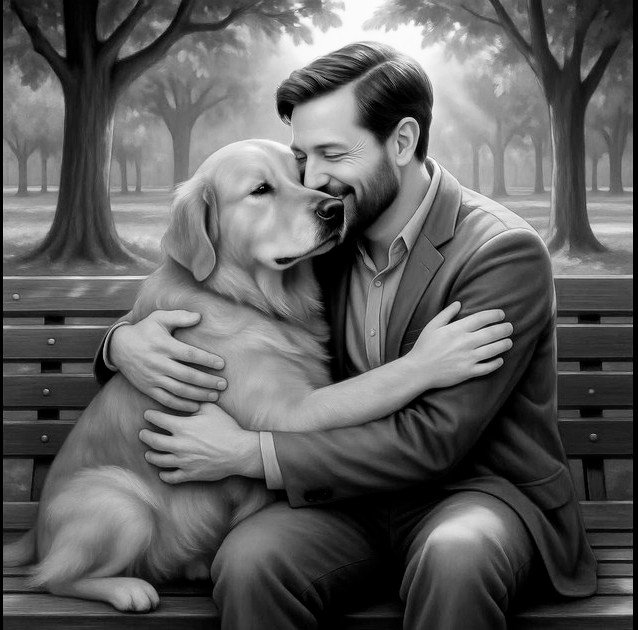
Decoding the Ancient Origins of Man’s Best Friend

Dogs may be our closest animal companions, but their beginning was far removed from modern homes, collars, and food bowls. Their ancestors were Ice Age wolves living in a world of glaciers, mammoths, and mobile hunter gatherers. New research using ancient DNA suggests that the relationship between humans and dogs was already well established more than 14,000 years ago thousands of years before farming and permanent villages appeared.
For many years, scientists believed that dogs became domesticated after humans settled down and began farming. However, the genetic evidence now points to an earlier story. Hunter-gatherers were living alongside dogs during the Late Upper Palaeolithic, when people still moved across the landscape in search of food.
Two important archaeological remains from Gough’s Cave in Britain and Pınarbaşı in Türkiye have provided some of the earliest genetic evidence of domestic dogs. The remains date to more than 14,000 years ago, and their DNA indicates that these animals were dogs rather than simply wolves that happened to live near people.
This discovery changes the traditional picture of domestication. Dogs did not necessarily emerge only after humans created farms and villages. Instead, the partnership may have developed while people and wolves were still sharing the harsh environments of the Ice Age.
Ancient DNA gives researchers the opportunity to compare animals that lived thousands of years ago with modern dogs and wolves. By examining their genomes, scientists can identify relationships between populations, detect changes in ancestry, and trace the movement of animals across ancient landscapes.
Bones and skulls can show whether an animal looked different from a wild wolf, but DNA can reveal relationships that cannot be seen from the skeleton alone. It can show whether an ancient canid belonged to a lineage related to later dogs, whether it carried wolf ancestry, and whether populations were replaced or mixed over time.
The latest genomic research describes dogs as descendants of ancient gray-wolf populations, although modern dogs are not simply the direct descendants of the wolves living today. Both modern wolves and dogs inherited DNA from older wolf populations that existed during the Pleistocene.
The first stage of domestication may have begun when less-fearful wolves approached human camps to feed on discarded food. Wolves that tolerated people were more likely to remain near settlements and survive. Over many generations, natural selection favored animals that were calmer around humans.
Humans may then have begun to recognize the usefulness of these animals. Early dogs could help track prey, alert people to danger, protect camps, and perhaps carry out other tasks. In return, they received food, shelter, and protection.
This process was probably gradual rather than a single dramatic moment when a human “adopted” a wolf. The transformation from wolf to dog may have involved many generations of contact, cooperation, breeding, and movement with human communities.
The origin of dogs remains one of the most debated questions in archaeology and genetics. Earlier studies proposed that dogs might have been domesticated independently in eastern and western Eurasia. Other research has suggested that all dogs descended from a single ancient wolf population that is now extinct.
The newest evidence emphasizes the complexity of the story. Early dogs were not genetically identical across Eurasia, and their populations changed as humans migrated, traded, and established new communities. Some ancient lineages disappeared, while others spread widely and contributed to later dogs.
A 2026 study of early dogs in Europe found that dogs were already genetically distinct from wolves at least 14,000 years ago.The research also suggests that early dogs were distributed across western Eurasia rather than being limited to one small location.
This does not necessarily meaThis makes dogs valuable to archaeologists. They were not passive animals left behind in one place; they were companions, workers, and travelling partners. Their history often followed the paths taken by the people who cared for them.n that domestication happened in exactly the same way everywhere. It indicates that dog history involved ancient population movements, genetic mixing, and the disappearance of some early lineages.
Ancient dog DNA also reflects the movement of human societies. When people migrated, dogs often travelled with them. Their genomes therefore preserve clues about ancient connections between populations that may be difficult to identify from human remains alone.
Researchers have found that changes in dog ancestry sometimes correspond with major human migrations, including the spread of farming communities across Europe. In some regions, earlier dog populations were replaced or heavily mixed with dogs associated with incoming human groups.
The archaeological record suggests that dogs were important to humans emotionally as well as practically. Some ancient dogs were deliberately buried, while others show signs of healed injuries that indicate they received care. These discoveries suggest that people sometimes invested time and resources in animals that were valued as individuals.
The dogs of the Ice Age may have helped with hunting and protection, but their role was not limited to survival. Their presence beside human burials and within settlements points to a relationship involving trust, affection, and social attachment.
In this sense, the phrase “man’s best friend” is not merely a modern expression. The emotional connection between people and dogs appears to have deep roots in prehistory.
The dogs living beside Ice Age hunters would have looked very different from today’s breeds. Modern animals such as German shepherds, Labradors, terriers, and toy breeds are the result of much later selection.
For thousands of years, humans selected dogs for particular abilities and appearances. Some were bred for hunting, others for guarding, herding, pulling, scent detection, or companionship. In recent centuries, this selection became especially intense, producing the remarkable range of shapes and sizes found among modern breeds
Despite their differences, all dogs share a deep connection to ancient canids. A tiny Chihuahua and a large mastiff may appear unrelated, but their genomes preserve the legacy of the same long relationship between humans and wolf ancestors.
Ancient DNA does not reveal a simple tale in which wolves suddenly became pets. Instead, it shows a long process shaped by climate, migration, human culture, natural selection, and repeated contact between dogs and wolves.
The earliest dogs were already living with people before agriculture transformed human society. They travelled across Eurasia, adapted to human environments, and became part of human communities. In return, humans gained hunting partners, guards, transport animals, and companions.
The latest evidence from ancient dog genomes therefore reveals that domestication was not only a biological transformation. It was also a social partnership. Over thousands of years, wolves became dogs because both species benefited from living together and because humans and canids gradually learned to depend on one another.
The story of the dog is ultimately a story of shared evolution. Long before modern houses and city streets, humans and dogs were already walking together through the Ice Age landscape.
Bergström, A. and colleagues. “Genomic history of early dogs in Europe.” Nature, 2026. The study examines ancient European dog genomes and reports that dogs were genetically distinct from wolves more than 14,000 years ago.