
Ancient DNA in Medieval Books Reveals the History of Sheeppox

An old religious book may seem like a strange place to find evidence of a virus. But scientists have discovered sheeppox DNA in medieval manuscripts, including the York Gospels. These books have preserved clues about a disease that affected animals hundreds of years ago.
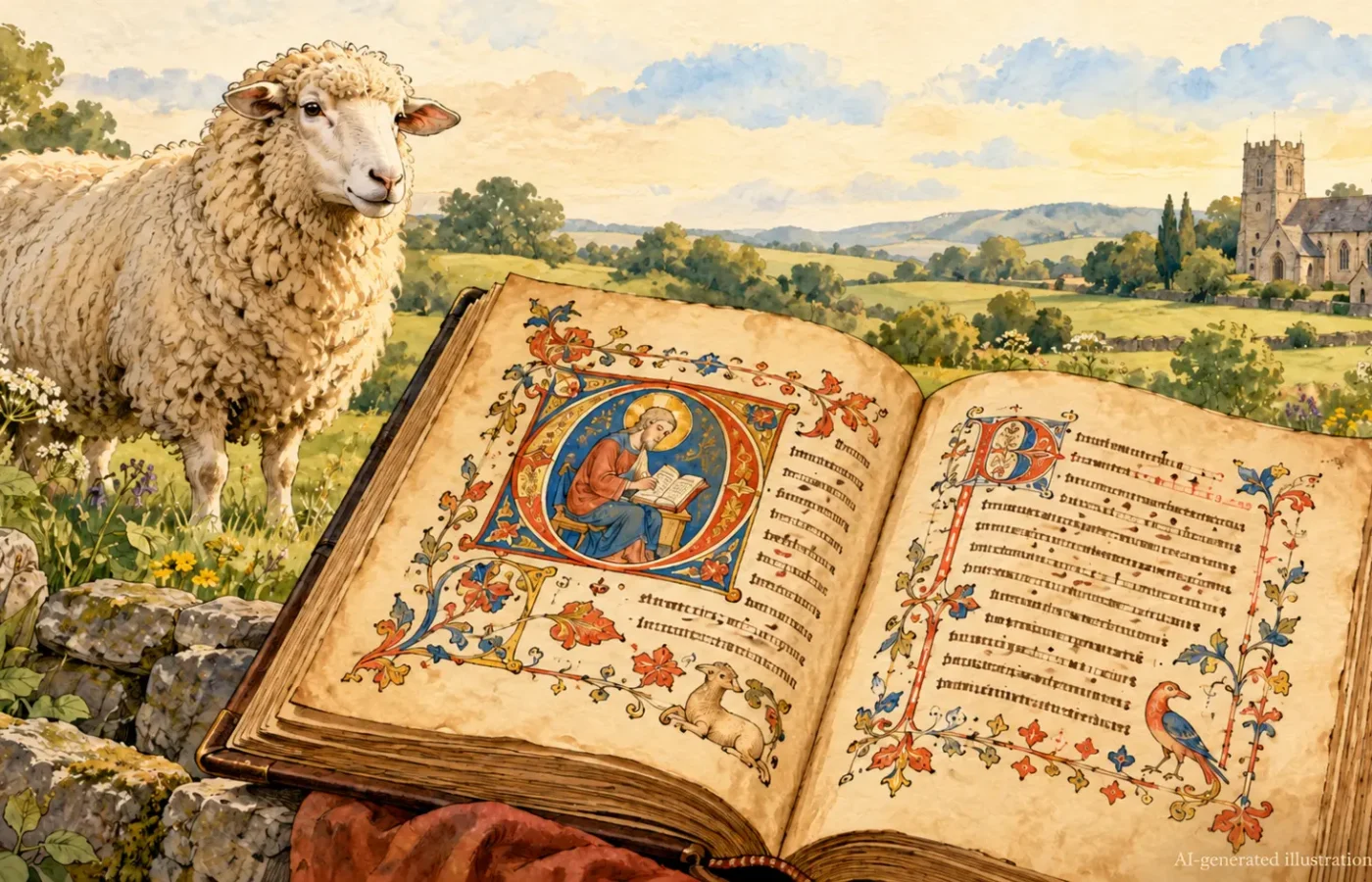
How did it get there? Many medieval books were written on parchment made from animal skin. That skin could hold tiny traces of DNA, even after it had been turned into a page. By studying these traces, researchers can learn about the animals used to make the books.
A team led by University College Dublin studied old manuscripts and animal remains. They examined more than 750 samples and recovered genetic information from ancient sheeppox viruses. This helped them explore the disease’s history over thousands of years.
One of the books they studied was the York Gospels, made around a thousand years ago. Sheeppox DNA was found in three of its leaves. Two belonged to the original book, while the third came from a document added later. The researchers also found the virus in other medieval manuscripts.
The team extracted DNA and read its genetic code. They then compared it with known viral DNA to identify it. Their discovery shows that old books can provide evidence about diseases as well as the ideas and beliefs recorded in their words.
The story goes back much further than the Middle Ages. Ancient sheep remains from Central Asia showed that sheeppox was already infecting animals nearly 3,800 years ago. The manuscripts helped researchers understand a later part of that history.
Sheeppox can cause fever, sores on the skin and death. For farmers who depended on their sheep, losing animals could mean less food, less wool and less money. Studying the virus helps us think about the difficulties farming communities may have faced, even when written records tell us little about them.
Some findings still need more investigation. Researchers found sheeppox DNA on pages made from calfskin and goatskin too. This could have several explanations. The virus may have infected other animals, or its DNA may have reached the skins through contact during processing. The evidence does not yet give a clear answer for every page.
People preserved these books because their words and artwork mattered. Without knowing it, they also kept traces of the animals behind the pages. Now, those traces are helping scientists learn about a part of the past that the writers never described.
The original research behind blog is by Louis L’Hôte and colleagues, published in Science Advances in 2026. Its title is “Three thousand five hundred years of sheeppox virus evolution inferred from archaeological and codicological genomes