
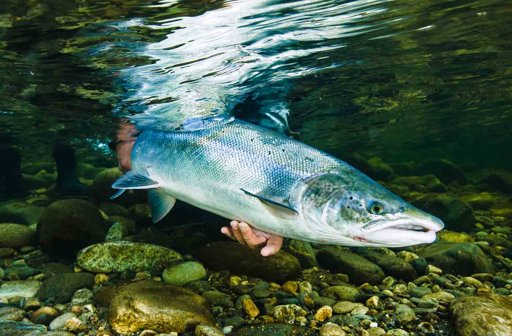
A Cave in Spain Is Rewriting the Story of Atlantic Salmon

Deep inside La Riera Cave in Asturias, northern Spain, archaeologists found something remarkable: ancient bones of Atlantic salmon (Salmo salar) that lived during and after the last Ice Age. By extracting and studying their DNA, scientists discovered that today’s Atlantic salmon are not simply unchanged survivors of Ice Age populations. Instead, salmon history has been far more dynamic than once believed.
During the Last Glacial Maximum, around 20,000 years ago, much of northern Europe was covered by ice or was too cold for many species. Yet the ancient salmon bones from La Riera Cave show that Atlantic salmon survived in northern Spain, which acted as a southern refuge. The cave contains a long archaeological sequence dating from about 20,500 to 6,500 years ago, making it an important window into life during the Late Pleistocene. The salmon remains were found in layers associated with human occupation, suggesting that Ice Age people in the region caught and ate salmon.
Researchers compared mitochondrial DNA from Pleistocene salmon bones with DNA from modern salmon populations. Mitochondrial DNA is inherited through the maternal line, so it is useful for tracing population history over long periods. The most surprising result was that a genetic type, or haplotype, that was common among Ice Age salmon in northern Spain has almost disappeared from modern salmon populations in the same region. In other words, the salmon living in Iberia today are not a direct genetic copy of the salmon that lived there thousands of years ago.
For a long time, scientists assumed that southern refuge populations such as those in Spain simply survived the Ice Age and later expanded northward as glaciers melted. The ancient DNA shows a more complicated picture: salmon populations survived, but their genetic makeup changed substantially over time. This matters because modern salmon cannot fully represent the genetic diversity of their ancient ancestors. Some Ice Age lineages may have been lost through climate change, shifts in river environments, population bottlenecks, or later mixing with salmon from other refuges.
This discovery is important for conservation. If salmon populations have already lost ancient genetic diversity, then protecting only present-day populations may not preserve the full evolutionary history of the species. Ancient DNA helps scientists understand what has been lost and how salmon responded to past climate changes. It also gives useful context for today’s climate crisis. Salmon have survived major environmental changes before, but the speed and scale of modern warming, habitat loss, and overfishing create new pressures that ancient populations did not face in the same way.
A Spanish cave preserved an 18,000 year old record of Atlantic salmon life. Its DNA tells us that salmon survived the Ice Age in Iberia, but many of their ancient genetic lineages have since vanished. The past was not simply preserved in today’s salmon it was partly lost, reshaped, and rewritten over thousands of years.
The original study has been published in the Journal Molecular Ecology