
Rakhigarhi and Ancient DNA: Searching for the Secrets of the Indus Valley

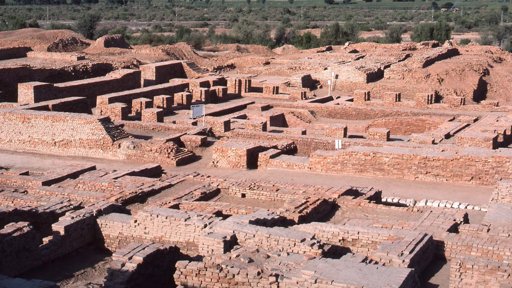
Rakhigarhi, one of the largest known cities of the Indus Valley Civilisation, continues to attract the attention of archaeologists and genetic scientists. Recent reports about a possible population explosion and the lack of clear migration clues have renewed interest in ancient DNA research at the site. Scientists hope that DNA recovered from ancient human remains can help explain who the Harappans were, how their population grew, and whether large groups of people migrated into the Indus region.
Rakhigarhi is located in Haryana, India, and was an important urban centre of the Indus Valley Civilisation. Like Harappa and Mohenjo-daro, it had planned settlements, craft production, trade networks, and an organised society. However, the Indus people did not leave behind written records that can be read today, because their script remains undeciphered. For this reason, archaeology and ancient DNA are especially important for understanding their history.
Ancient DNA, often called aDNA, is genetic material taken from very old bones, teeth, or other preserved human remains. It allows researchers to study the biological ancestry of people who lived thousands of years ago. In simple words, ancient DNA works like a biological time capsule. It cannot answer every historical question, but it provides direct evidence about the people of the past.
The most important ancient DNA study from Rakhigarhi was published in the journal Cell in 2019. Researchers examined 61 skeletal samples from the site, but most of the DNA had been damaged by South Asia’s warm and humid climate. Only one sample, belonging to a woman who lived around 4,500 to 5,000 years ago, produced enough usable DNA for detailed analysis.
Her genome showed that she was mainly related to ancient Iranian associated populations and South Asian hunter gatherer groups. The study also found no detectable ancestry from Steppe pastoralists, who were ancient groups associated with the grasslands of Central Asia and Eastern Europe. This finding suggested that Steppe related ancestry was not widespread in northwest South Asia during the main period of the Indus Valley Civilisation.
This does not mean that migration never happened in South Asian history. Instead, it means that the Rakhigarhi woman did not carry visible Steppe ancestry. Later genetic research suggests that Steppe-related ancestry entered South Asia after the main Harappan period, roughly during the second millennium BCE. Therefore, the Indus Valley Civilisation appears to have developed mainly from populations already living in South Asia, while later mixing occurred after the civilisation declined.
Researchers are also trying to understand signs of a population increase at Rakhigarhi. A growing population may have resulted from better food production, expanding trade, favourable environmental conditions, or the movement of people from smaller settlements into the city. However, archaeologists have not found strong evidence of a large scale migration that could fully explain this growth. This is why they continue to search for more ancient DNA samples and use other scientific methods alongside genetics.
One genome is valuable, but it cannot represent an entire city or civilisation. A single person may have a unique family background, and DNA preservation is very difficult in hot climates. Scientists therefore need more well preserved skeletons from Rakhigarhi and other Harappan sites. They also combine DNA evidence with studies of bones, teeth, diet, burial practices, pottery, settlements, and environmental change to build a clearer picture of the past.
The Rakhigarhi evidence suggests that the people of the Indus Valley were closely connected to the deeper population history of South Asia. Their ancestry included Iranian related and South Asian hunter gatherer related components, while Steppe ancestry was absent in the individual studied. The findings support the idea that the Harappan civilisation had strong local South Asian roots and that South Asian history was shaped by long-term interactions among different populations rather than by one single migration event.
The story of Rakhigarhi is important because it helps us understand how ancient societies developed, expanded, and interacted. It also reminds us that history should be based on scientific evidence rather than assumptions. As more ancient remains are discovered and DNA technology improves, researchers may finally uncover more answers about the people who built one of the world’s earliest urban civilisations.
This study has been published originally, with the Reference
Shinde, V., Narasimhan, V. M., Rohland, N., Mallick, S., Mah, M., Lipson, M., et al. (2019). An Ancient Harappan Genome Lacks Ancestry from Steppe Pastoralists or Iranian Farmers. Cell, 179(3), 729–735.e10. https://doi.org/10.1016/j.cell.2019.08.048[pubmed.ncbi.nlm.nih